Tap Into This Exciting Niche With These 297 Super Prompts
Just copy, paste, and generate short stories in minutes.
Nostalgia is huge! The seniors market is huge! Nostalgic short stories for seniors is a win-win niche.
The 50s-80s decades are full of memories that many remember with a longing for the times when life was easier and the way we entertained ourselves was simpler.
Do you remember those special moments when you first saw color tv, or had your first walkman, or wore a mood ring, or saw E.T. or so much more!
There are thousands of seniors who love stories of the good old days. This is a huge niche on Amazon and you can be in this too.
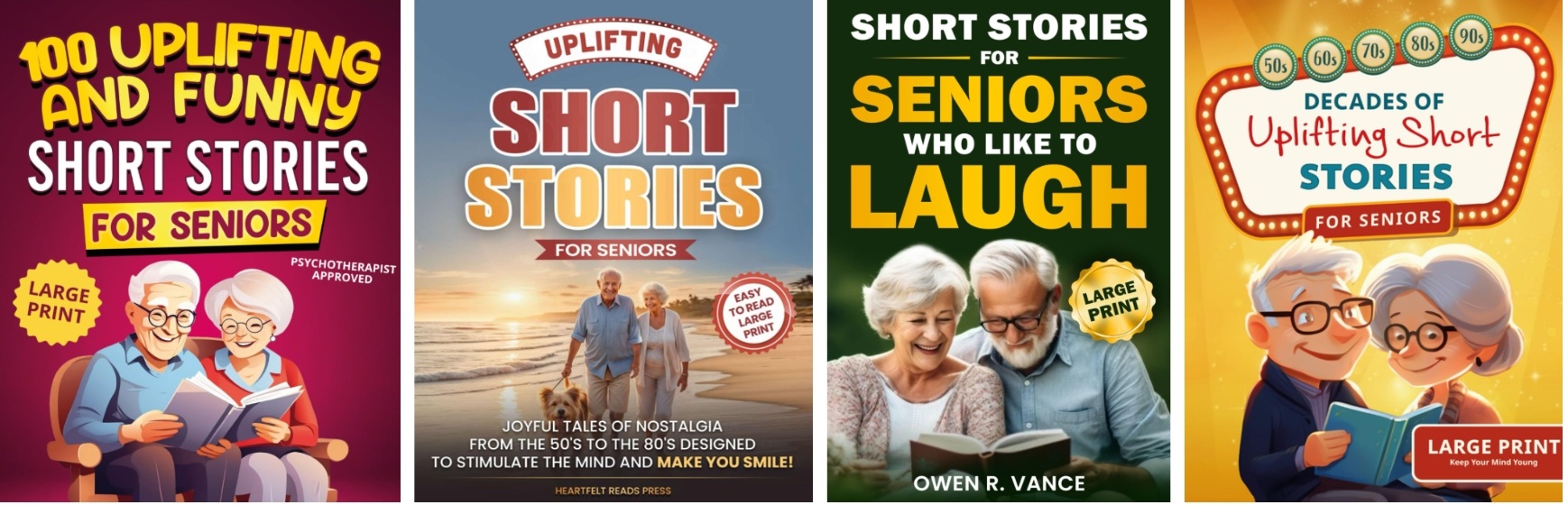 Best seller senior short story books on Amazon
Do you remember the day when you were 'liberated' from having to stand near the phone cradle because the cord only reached a few feet? Those first wireless phones were the size of a brick and weighed nearly as much - remember those?
Did you have a pet rock? Did you wear bellbottoms? Remember when you bought your first cassette?
These memories are ones that millions of older people have! That's why these books sell so well. The books are easy to make! Each story is more or less a page long, and AI is perfect for writing short pieces like these.
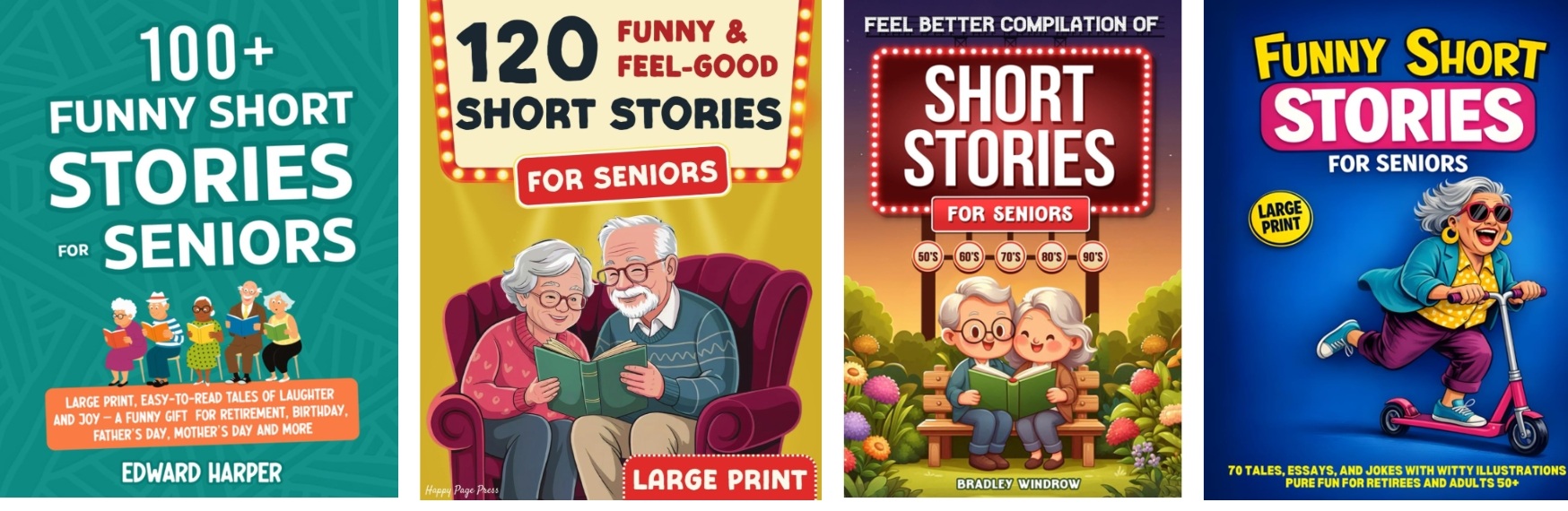
The stories in these books are short. Each story is based on something memorable from the past.
Many of the stories are written from the perspective of a fictional person remembering the real event.
The stories are set to each decade - the 50s through the 80s. There is so much from the past to make these books irresistible.
297 Prompts for Senior Short Stories
A collection of ready to use prompts designed specifically to generate stories that seniors love reading. Try these out for yourself (copy and paste into ChatGPT, Claude, or other AI):
Try them for yourself!
Simply copy any of these sample prompts into ChatGPT and create a short story seniors will love to read:
Write a 500–1000 word uplifting nostalgic short story set in the 1960s. The story should revolve around the nostalgic element moon landing, which was a recognizable part of everyday life during that time. Story Type: Family Moment. Create a warm and engaging story that someone in their 60s, 70s, or 80s today would enjoy reading because it reminds them of earlier decades. Main Character: Create a relatable character who is young during the time of the story (typically between ages 10 and 25). Name: Chris. Age during the story: 14. Setting: Location: home. Era Detail Requirement: Include at least 3–5 authentic cultural details from the 1960s. These may include music, clothing styles, toys, foods, technology, slang, television shows, popular activities, or everyday household objects from the era. Story Requirements: The story must feel authentic to the 1960s. Focus on small personal moments rather than dramatic or life-threatening events. Avoid violence, tragedy, or dark themes. Maintain a tone that is warm, nostalgic, reflective, and uplifting. Narrative Structure: 1. Begin with a scene that introduces the moon landing. 2. Show the character’s curiosity, excitement, or challenge involving the nostalgic element. 3. Include sensory details and everyday moments that bring the decade to life. 4. Build toward a meaningful or satisfying moment related to the nostalgic element. 5. End with a gentle reflection on the experience or what the character learned. Write in smooth narrative prose suitable for a 1–2 page short story in a nostalgic story collection. Do not include bullet points, lists, or subheadings in the story itself.
Write a 500–1000 word uplifting nostalgic short story set in the 1970s. The story should revolve around the nostalgic element first portable cassette player, which was a recognizable part of everyday life during that time. Story Type: First Experience. Create a warm and engaging story that someone in their 60s, 70s, or 80s today would enjoy reading because it reminds them of earlier decades. Main Character: Create a relatable character who is young during the time of the story (typically between ages 10 and 25). Name: Harriet. Age during the story: 19. Setting: Location: neighborhood. Era Detail Requirement: Include at least 3–5 authentic cultural details from the 1970s. These may include music, clothing styles, toys, foods, technology, slang, television shows, popular activities, or everyday household objects from the era. Story Requirements: The story must feel authentic to the 1970s. Focus on small personal moments rather than dramatic or life-threatening events. Avoid violence, tragedy, or dark themes. Maintain a tone that is warm, nostalgic, reflective, and uplifting. Narrative Structure: 1. Begin with a scene that introduces the first portable cassette player. 2. Show the character’s curiosity, excitement, or challenge involving the nostalgic element. 3. Include sensory details and everyday moments that bring the decade to life. 4. Build toward a meaningful or satisfying moment related to the nostalgic element. 5. End with a gentle reflection on the experience or what the character learned. Write in smooth narrative prose suitable for a 1–2 page short story in a nostalgic story collection. Do not include bullet points, lists, or subheadings in the story itself.
Write a 500–1000 word uplifting nostalgic short story set in the 1950s. The story should revolve around the nostalgic element TV dinners becoming popular, which was a recognizable part of everyday life during that time. Story Type: family moment. Create a warm and engaging story that someone in their 60s, 70s, or 80s today would enjoy reading because it reminds them of earlier decades. Main Character: Create a relatable character who is young during the time of the story (typically between ages 10 and 25). Name: Susan. Age during the story: 9. Setting: Location: home. Era Detail Requirement: Include at least 3–5 authentic cultural details from the 1950s. These may include music, clothing styles, toys, foods, technology, slang, television shows, popular activities, or everyday household objects from the era. Story Requirements: The story must feel authentic to the 1950s. Focus on small personal moments rather than dramatic or life-threatening events. Avoid violence, tragedy, or dark themes. Maintain a tone that is warm, nostalgic, reflective, and uplifting. Narrative Structure: 1. Begin with a scene that introduces the TV dinners becoming popular. 2. Show the character’s curiosity, excitement, or challenge involving the nostalgic element. 3. Include sensory details and everyday moments that bring the decade to life. 4. Build toward a meaningful or satisfying moment related to the nostalgic element. 5. End with a gentle reflection on the experience or what the character learned. Write in smooth narrative prose suitable for a 1–2 page short story in a nostalgic story collection. Do not include bullet points, lists, or subheadings in the story itself.
How It Works:
- Open the prompt sheet
- Copy any prompt you want
- Paste it into ChatGPT, Claude, or your favorite AI
- Instantly generate a 500-1000 word short story
That’s it. No need to search on the internet.
Each prompt is engineered to create a heartwarming story based around an item or event in the past
Your first transistor radio.
Hula Hoops.
Sputnik and the space race.
Jonas Salk develops the polio vaccine.
The first Barbie doll is released.
1960s
Zip codes are put into use.
President Kennedy is shot in Dallas.
Etch A Sketch is released.
Silly Putty becomes a world wide hit
Woodstock
The Beatles play at Shea Stadium
The moon landing
The first Earth day
Saturday Night Fever
Pong is a massive success
Viewmaster, LiteBrite, and Spirograph are released
Bell bottoms and other fashion
1980s
Personal computers go mainstream
Rubik's cube is a huge hit
MTV and music videos
Michael Jackson releases Thriller
Halley's comet
The Berlin Wall comes down
Bonus! Includes the prompt template itself so you can create any number of stories based on your own experiences.